T-money vs WOWPASS vs Climate Card: Which Transit Card Should You Buy?
Quick answer: For most visitors, a plain T-money card is the safest choice: it costs around ₩3,000 at any convenience store, works on subways and buses across Korea, and the leftover balance can be refunded (minus a ₩500 fee). Pick WOWPASS if you also want a prepaid payment card with currency exchange (₩6,000 issue fee, T-money built in). The Climate Card short-term pass (₩5,000 for 1 day up to ₩20,000 for 7 days, plus a ₩3,000 card) only pays off if you stay inside Seoul and ride a lot.
Korean subways and buses are built around tap-on transit cards, so buying one is usually the first thing to do after you land. Visitors have three popular options, and they solve different problems. This guide compares T-money, WOWPASS and the Seoul Climate Card (기후동행카드) so you can pick one in a couple of minutes.
All prices and rules below were checked on the official Tmoney, WOWPASS and Seoul Metropolitan Government websites in November 2026.
Key facts at a glance
| T-money (티머니) | WOWPASS (와우패스) | Climate Card short-term pass (기후동행카드 단기권) | |
|---|---|---|---|
| Card cost | Around ₩3,000 (some designs cost more) | ₩6,000 first-time fee, not refundable | ₩3,000 physical card, plus the pass |
| What you pay for rides | Each ride from your balance (subway base fare ₩1,550) | Each ride from the separate T-money balance | Nothing extra: 1 day ₩5,000, 2 days ₩8,000, 3 days ₩10,000, 5 days ₩15,000, 7 days ₩20,000 |
| Where it works | Subways and buses nationwide, taxis with a card reader, convenience stores | Same as T-money for transit; IC-chip payments at shops that take Korean cards | Seoul subway stations and Seoul-licensed buses only (plus getting off at Incheon Airport) |
| How to top up | Korean won cash at convenience stores and station machines | Cash in 16 currencies at WOWPASS machines, or overseas card in the app | Station machines in Seoul; overseas cards may carry a surcharge |
| Getting money back | Balance minus ₩500 fee | Cash withdrawal at WOW Exchange machines, ₩1,000 fee | Charged amount minus fares used and a ₩500 fee, only before the pass expires |
Step 1: Decide where and how much you will travel
The right card depends mostly on two questions: will you leave Seoul, and how many rides will you take each day?
- Leaving Seoul at all (Busan, Jeju, Incheon, Suwon, the airport ride into the city): get T-money or WOWPASS. The Climate Card only covers Seoul.
- Staying in Seoul and riding several times a day: the Climate Card can save money. Without counting the ₩3,000 card, the 1-day pass beats paying per trip from about four base-fare trips, and the 3-day pass from about seven trips in total.
- Want one card for shopping and transit: WOWPASS adds a prepaid payment balance on top of T-money.
Quick transfers between subway and bus are often charged as one combined fare, so you may pay fewer fares than rides, which makes the Climate Card harder to pay off than it looks.
Step 2: Buying and using a T-money card
T-money is the most widely used transit card in Korea, and you do not need ID, an app or a sign-up to buy one.
- Buy it at a convenience store such as GS25, CU, 7-Eleven or Emart24, or from a card vending machine in a subway station. At the counter, say “T-money card, please” and how much you want to load.
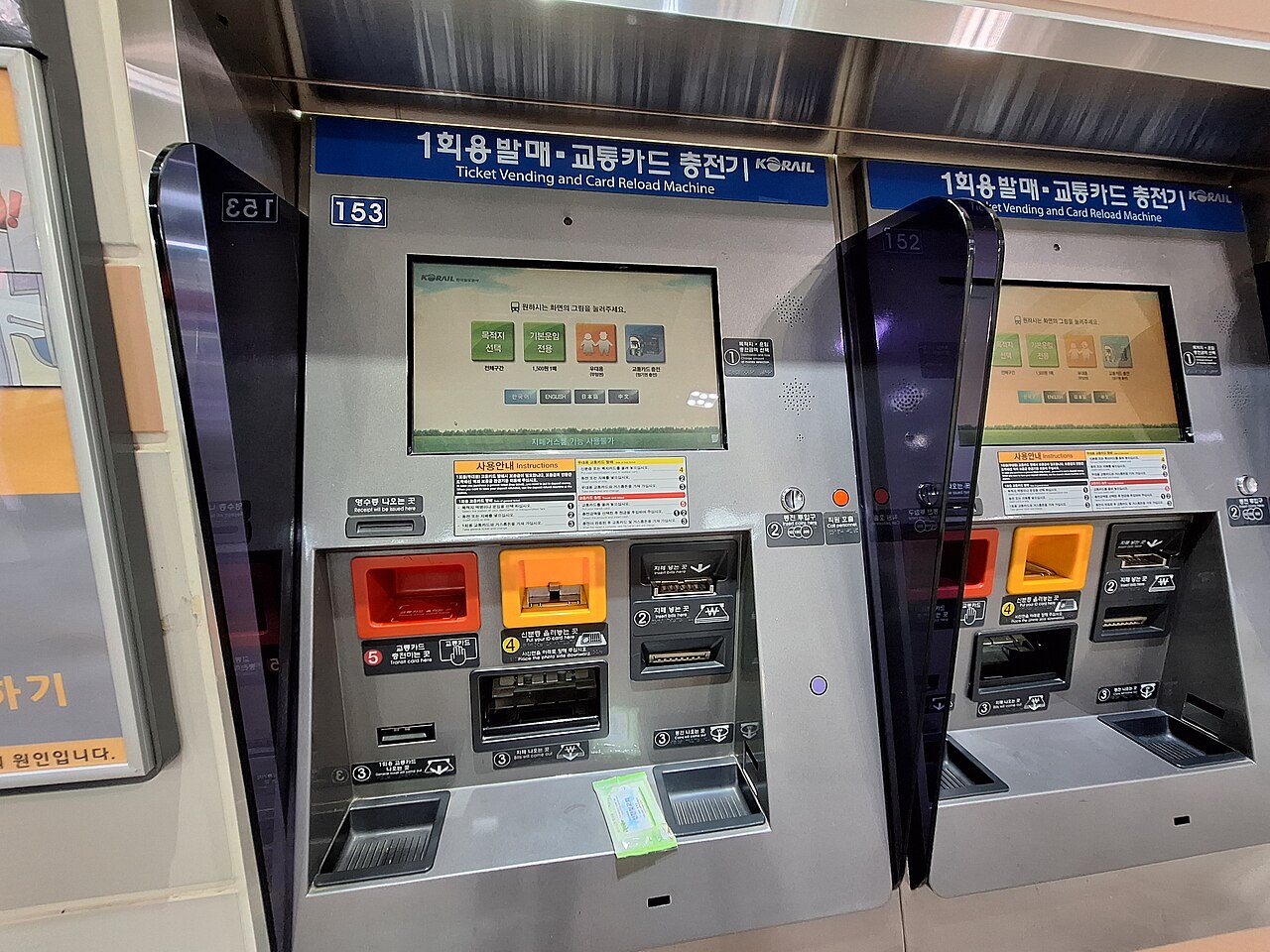
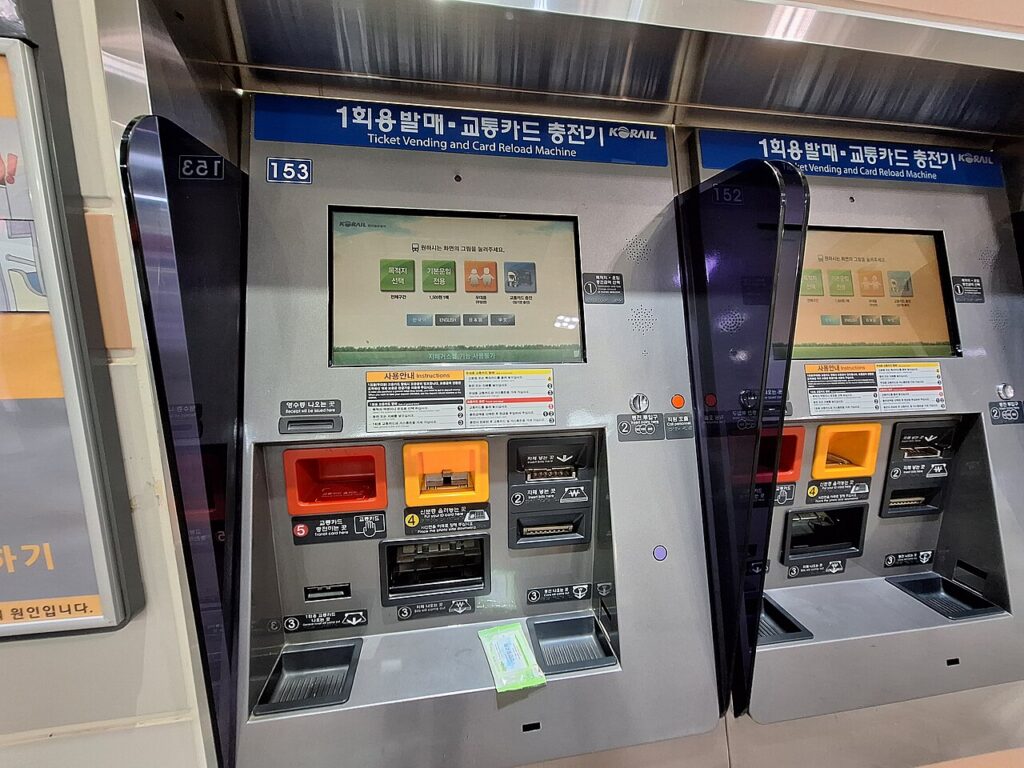
- Top up with Korean won cash at convenience stores or the station machines (교통카드 충전기, Card Reload Machine). Top-ups are in ₩1,000 steps, from ₩1,000 to ₩90,000 at a time, and the card can hold up to ₩500,000.
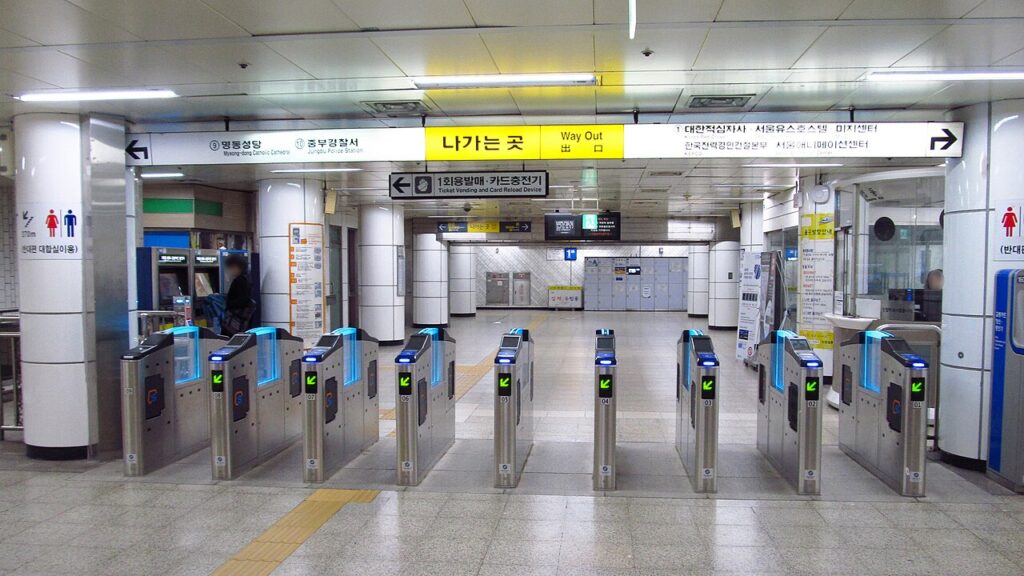
- Tap the card on the reader at the subway gate when you enter and when you leave. On buses, tap when you board and again when you get off.
- With a card, the adult subway base fare in the Seoul area is ₩1,550 for the first 10 km, while a single-journey ticket costs ₩1,650 plus a refundable ₩500 deposit.
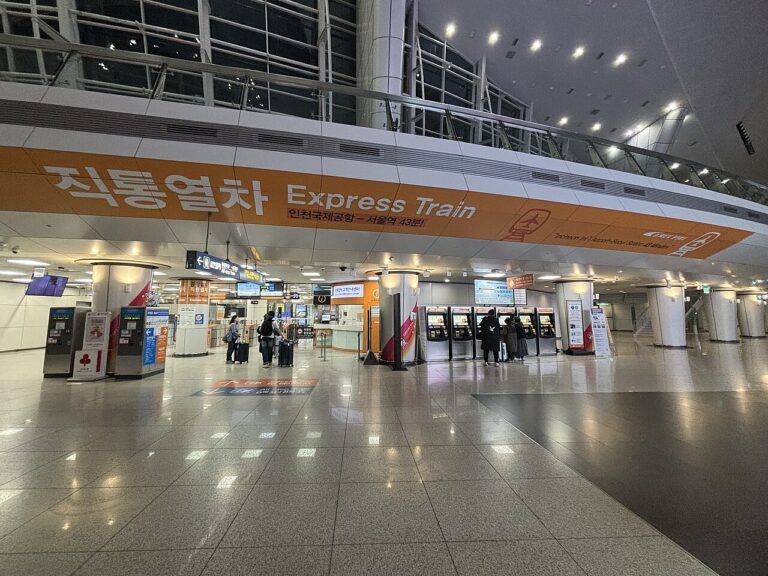
Tmoney suggests loading around ₩30,000 to ₩40,000 for a 3-night, 4-day trip. Arriving at Incheon? Buy the card at an airport convenience store first, then see our guide on how to get from Incheon Airport to Seoul.
Step 3: Getting a WOWPASS
WOWPASS is a prepaid card for foreign visitors (not Korean nationals) that combines T-money with a payment balance you can spend in shops.
- Issue the card at a WOWPASS machine (airports, major subway stations and some hotels) with your passport. The first-time membership fee is ₩6,000 and is not refunded.
- Load the WOWPASS balance with cash in one of 16 currencies at a WOWPASS machine, or with an overseas credit card in the WOWPASS app. You spend this balance by inserting the card’s IC chip, like a local debit card.
- Load the T-money balance separately. You can move money from your WOWPASS balance to T-money in the app (not the other way around), or top up with Korean won cash at subway machines or convenience stores.
- Tap the card at subway gates and on buses exactly like a regular T-money card.
Note that the WOWPASS machines in the CU convenience stores at Incheon Airport take only Korean won cash and cannot exchange money or pay out your balance. WOWPASS also works only for in-person payments, not online shopping or delivery apps.
Step 4: Using a Climate Card short-term pass
The Climate Card (기후동행카드) is Seoul’s unlimited-ride pass. Visitors use the short-term version (단기권), which covers unlimited rides for 1, 2, 3, 5 or 7 days. The 30-day pass could only be recharged until August 31, 2026, so this guide covers the short-term passes only.
- Buy a physical card (₩3,000) from the newer transit card vending machines in Seoul Metro Line 1 to 8 stations, or at convenience stores near stations on Line 9, the Ui-Sinseol Line and the Sillim Line. Tmoney also lists the Myeongdong and Seoul Tourism Plaza tourist information centers.
- Charge the pass on the day you want to start. The period begins on the charging date, you cannot charge in advance, and each day runs from the first train (around 4 am) until the last train.
- Pay with cash or a card. Tmoney says the newer machines on Lines 1 to 8 accept overseas credit and debit cards with an extra fee of about 3.7%, but some machines may not accept foreign cards, so carry some cash.
- Tap in and out as usual. You must also tap when getting off a bus or leaving the subway.
What the pass covers: subway stations inside Seoul (including Gimpo Airport Station) and Seoul-licensed city and town buses, including late-night buses. It does not cover the Sinbundang Line, GTX, subway stations outside Seoul, express buses (광역버스), airport buses or buses licensed in other regions. Public bikes (따릉이, Ttareungi) and the Hangang Bus are not included either.
One newer rule matters for your last day. Since October 1, 2026, you can board in Seoul and get off at Incheon Airport Terminal 1 or Terminal 2 with the Climate Card, but you cannot board at the airport stations with it. In other words, it can take you to the airport at the end of your trip, but not into the city when you arrive.
Step 5: Getting your money back before you fly
- T-money: convenience stores and other T-money sales points refund the remaining balance in cash, minus a ₩500 fee. The price of the card itself is not refunded. Refunds of more than ₩50,000 are only possible at Tmoney Town near Seoul Station Exit 10 (Seoul City Tower, 1st floor).
- WOWPASS: withdraw your WOWPASS balance as Korean won at a WOW Exchange machine after registering the card in the app. Each withdrawal costs ₩1,000 and is capped at ₩100,000.
- Climate Card: refunds are the charged amount minus the fares you actually used and a ₩500 fee, and you must apply before the pass expires. If you do not have a Korean bank account, you start the refund at a station reload machine and then visit Tmoney Town in person twice (the cash is paid out three business days after you apply), so most visitors simply buy a pass length they will use up.
Local tips
- Get one card per person. One T-money card cannot be used for several people on the subway at the same time.
- Spend small leftover balances at a convenience store on your last day instead of paying the ₩500 refund fee.
- If you are going to buy a Climate Card, it can still make sense to carry a T-money card for the airport ride, trips outside Seoul and convenience store payments, since the Climate Card cannot be used to pay in shops.
- iPhone users need a physical Climate Card. The mobile version is for Android phones (Android 12 or later).
Common mistakes to avoid
- Forgetting to tap off the bus. You lose the transfer discount and may be charged more on your next ride.
- Buying a Climate Card for the airport ride into Seoul. It cannot be used when boarding at the Incheon Airport stations, and airport buses are not covered.
- Mixing up the two WOWPASS balances. Money in the WOWPASS balance does not pay for rides until you move it to the T-money balance.
- Charging a Climate Card the night before. The pass starts on the day you charge it, so charging late in the evening wastes most of a day.
- Riding outside Seoul on a Climate Card. Exit at a station outside the coverage area and staff will collect the fare for the whole trip.
FAQ
Can I use a T-money card outside Seoul?
Yes. T-money works on subways and buses in cities across Korea, including Busan and Jeju, and in taxis that have a card reader.
Is WOWPASS worth it just for transit?
Not really. For transit alone, a regular T-money card does the same job for less. WOWPASS makes sense if you will also use its payment balance or exchange machines.
Is the Climate Card worth it for a 3-day trip to Seoul?
Only if you ride a lot. The 3-day pass costs ₩10,000 plus the ₩3,000 card, which is roughly the price of eight or nine base-fare trips on T-money. If you will walk a lot or leave Seoul, T-money is usually cheaper.
Last updated: November 5, 2026. Sources: Tmoney foreigner guide, Tmoney Climate Card guide, Tmoney transit card guide, Seoul Metropolitan Government Climate Card, Seoul Climate Card short-term pass (Korean), Seoul subway fares (Korean), WOWPASS FAQ, VISITKOREA transportation cards, WOWPASS guide, Seoul single-journey ticket (Korean). Prices and rules change often, so please double-check before you travel.